
We offer specialist, oral-surgery-led tongue-tie assessment and treatment for newborns, children, teenagers, and adults at our West Byfleet practice. Care is provided by leading surgeon Dr. Ashana Gupta in partnership with Tongue Tie Surrey.
From £440: Assessment, treatment & support.
Book a tongue-tie consultation
At West Byfleet Dental & Implant Centre, we are pleased to offer a specialist tongue-tie service as part of Tongue Tie Surrey.
The service is led by Miss Ashana Gupta, Specialist Oral Surgeon, who holds a specialist interest in paediatric oral surgery, neonatal tongue-tie, and infant feeding.
We provide comprehensive assessments and treatment for patients with suspected tongue-tie, focusing closely on how tongue mobility and oral function affect each individual.
A tongue-tie is never diagnosed by appearance alone; our thorough assessment evaluates anatomy, tongue movement, symptoms, functional challenges, and clinical history.
For further information about the wider Tongue Tie Surrey service, please visit Tongue Tie Surrey.
Specialist oral surgeon: Your assessment and treatment are provided by a Specialist Oral Surgeon with a particular interest in paediatric oral surgery, neonatal tongue-tie and infant feeding.
Function-focused assessment: We consider tongue movement and function alongside anatomy, symptoms and clinical history rather than relying on appearance alone.
Laser treatment: Laser tongue-tie release is available for newborn babies up to 12 weeks old and for patients aged 7 years and above, where clinically appropriate.
Infant-feeding support: Feeding support can be incorporated into the care pathway, including access to appropriately qualified lactation and infant-feeding professionals.
We offer comprehensive assessments and, where clinically indicated, tongue-tie release for newborns up to 12 weeks of age.
Because feeding difficulties can stem from many different causes, a detailed assessment is essential before deciding if a frenotomy is appropriate. Our evaluation carefully considers your baby’s oral anatomy, tongue mobility, feeding history, and any symptoms you are experiencing. Where helpful, families can also receive infant-feeding guidance from a qualified lactation professional.
Where release is clinically indicated, laser treatment may be offered. The choice of technique is discussed with parents as part of the consent process.
Parents are encouraged to ask questions and discuss alternative options before deciding whether to proceed.
Tongue-tie release from 7 years of age
We also offer specialist tongue-tie assessments and release for children aged 7 and above, teenagers, and adults.
For older patients, our evaluation focuses on whether restricted tongue movement is causing functional concerns and if treatment will provide meaningful benefit. Procedures can be comfortably carried out under local anaesthetic.
For younger patients who may feel anxious, inhalation sedation is also available to ensure a relaxed experience. Where clinically appropriate, laser release is offered.
Tongue-tie and feeding difficulties can be complex, and not every feeding difficulty is caused by tongue-tie.
Where appropriate, our service can work alongside appropriately qualified infant-feeding professionals, including IBCLC-qualified lactation consultants, to support families before and after treatment.
This multidisciplinary approach aims to ensure that parents receive feeding support alongside, rather than instead of, appropriate clinical assessment.
Tongue-tie release – From £440
The treatment fee may include the procedure and relevant infant-feeding advice and postoperative support. The exact fee will depend on the patient’s individual clinical needs and treatment pathway.
A personalised treatment plan and costs will be discussed before treatment is undertaken.
Tongue-tie release is a surgical procedure and, as with any procedure, there are potential risks and limitations.
These may include pain, bleeding, swelling, infection, scarring, delayed healing, altered sensation and the possibility that symptoms or functional difficulties may persist following treatment.
Rare complications can occur. These will be discussed during your consultation so that you can make an informed decision about whether treatment is appropriate.
Frenotomy is not appropriate for every patient with a visible lingual frenulum or restricted tongue appearance. Assessment is therefore an important part of the treatment process.
 Frenectomies
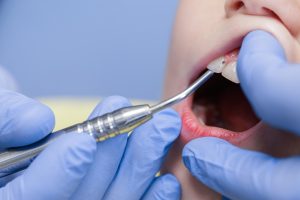
A frenectomy is simply the removal of a frenum in the mouth. A frenum is a muscular attachment between two tissues. There are two frena (the plural form of frenum) in the mouth that can sometimes obstruct normal function and are candidates for frenectomies. These frena are called the lingual frenum, which connects the tongue to the floor of the mouth, and the maxillary labial frenum, which connects the inside of your upper lip to your gums just above your upper two front teeth.
The Frenectomy procedure is a simple surgical procedure that generally takes less than thirty minutes to complete. The procedure is performed using local anaesthesia, sometimes with intravenous sedation as well.
Frenectomies will usually take a couple of weeks to completely heal. You may have to take over-the-counter drugs like Ibuprofen to relieve any pain that you may have. You should rinse with saltwater or an antiseptic mouthwash such as Chlorhexidine mouthwash in order to keep the surgical area clean. You should brush carefully around the area and floss daily as well.
If you have had a frenectomy using a scalpel, you will have resorbable sutures which should disappear by themselves within a couple of weeks. You should go back to see your dentist after two weeks to remove any sutures that have not resorbed and for us to check that you are healing well.
We offer assessment and tongue-tie release for newborn babies up to 12 weeks of age, where clinically appropriate.
Yes. Laser tongue-tie release is available where clinically appropriate for both newborns (up to 12 weeks old) and patients aged 7 years and above.
Yes, we provide assessments and treatment for children aged 7 and above, teenagers, and adults.
Yes. Feeding support is an integral part of our care pathway. Where appropriate, families can receive guidance from qualified infant-feeding specialists, including IBCLC-certified lactation consultants.
No. A visible or prominent frenulum does not mean treatment is automatically required. The decision to recommend a release is based on a thorough clinical assessment and whether the restriction is causing functional difficulties.
Treatment prices start from £440. Your exact fee will depend on your individual treatment plan and will be fully explained prior to any procedure.
As with any minor surgical procedure, potential risks include temporary pain, swelling, bruising, bleeding, and scarring. Occasionally, if a release is incomplete or healing restricts movement, a repeat procedure may be required (this is more common with lingual than labial frenectomies). There is also a small risk of nerve irritation causing temporary tingling or numbness, which usually resolves within a few weeks; permanent loss of sensation is extremely rare.

“Thank you so much for my beautiful new teeth. I cannot begin to express adequately how deeply thrilled I am with them.”
A.W.
“Many thanks, again, for dealing with me in such a cordial and considerate manner.”
L.T.
“The problem with my deeply relishing the joy of my new teeth is that there has been a consequent urge to share some of the wondrous reactions to them with you.”
L.E.
“Many thanks, I do hope that your work gives you as much satisfaction and pleasure as it gives your patients."
R.D.
“With a Million x Thank You’s for everything, and wishing you all the continuing success and happiness.”
A.C.


We have been successfully placing and restoring dental implants for many years, enabling patients to smile with confidence.

Today, how you look is more a matter of choice than genes and it is no different when considering your choice of smile.

At West Byfleet Dental and Implant Centre we offer a wide range of Orthodontic treatments, providing treatments to people of all ages.

Whitening is a process where the tooth discolouration is 'whitened' to a lighter shade. It removes the staining agent through chemical means.

As dentists with an interest in treating dental phobics, it is essential that we treat you, the patient as an individual and customise your treatment to your specific needs.

At West Byfleet Dental and Implant Centre we offer a range of anti-wrinkle and facial rejuvenation treatments.

 01932 620200
 info@westbyfleetdental.co.uk

Site last updated November 2026
Designed & managed by Dental Design | Read our patient reviews on DentistFinder.net | Privacy Policy | Emergency Information


